



Proton Pump
Proton pump is an integral membrane protein that is capable of moving protons across a biological membrane. Mechanisms are based on conformational changes of the protein structure or on theQ cycle. In cell respiration, the proton pump uses energy to transport protons from the matrix of the mitochondrion to the inter-membrane space. It is an active pump, that generates a protonconcentration gradient across the inner mitochondrial membrane, because there are more protons outside the matrix than inside. The difference in pH and electric charge (ignoring differences inbuffer capacity) creates an electrochemical potential difference that works similar to that of a battery or energy storing unit for the cell. The process could also be seen as analogous to cycling uphill or charging a battery for later use, as it produces potential energy. The proton pump does not create energy, but forms a gradient that stores energy for later use.
All Product Categories
-
Proton Pump Related Products (187)
Related Products (187)

-
Antibodies (1)
-
RUVBL1/2 ATPase-IN-1
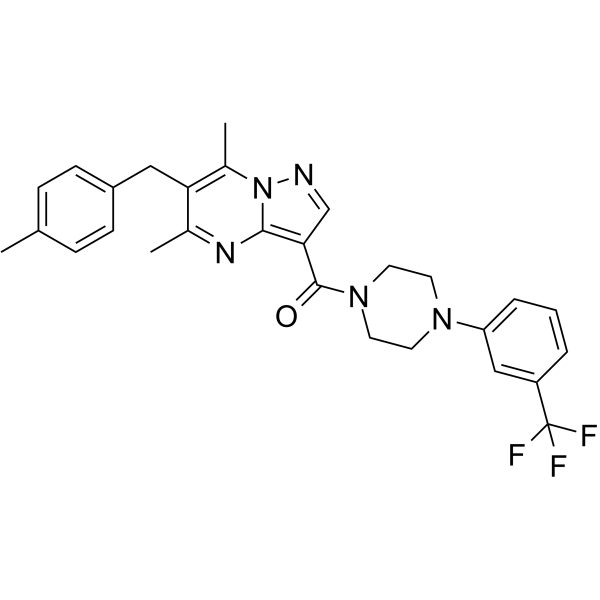 0 ImagesRUVBL1/2 ATPase-IN-1 (compound 18) is a potent and selective inhibitor of RUVBL1/2 ATPase with IC50 values of 6.0 and 7.7 μM, respectively. RUVBL1 and RUVBL2 are highly conserved AAA ATPases (ATPases Associated with various cellular Activities) and highly relevant to the progression of cancer. RUVBL1/2 ATPase-IN-1 has the potential for the research of cancer diseases.
-
Manzamine A hydrochloride
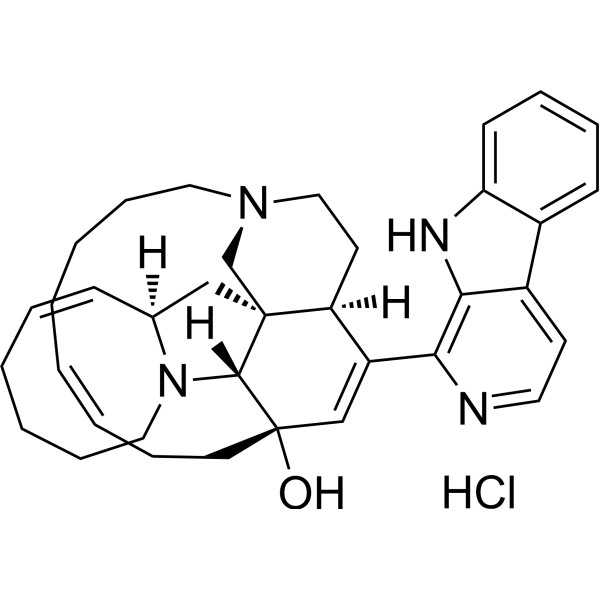 0 ImagesSynonyms: Keramamine A hydrochlorideManzamine A hydrochloride, an orally active beta-carboline alkaloid, inhibits specifically GSK-3β and CDK-5 with IC50s of 10.2 μM and 1.5 μM, respectively. Manzamine A hydrochloride targets vacuolar ATPases and inhibits autophagy in pancreatic cancer cells. Manzamine A hydrochloride has antimalarial and anticancer activities. Manzamine A hydrochloride also shows potent activity against HSV-1.
-
Tiludronate disodium
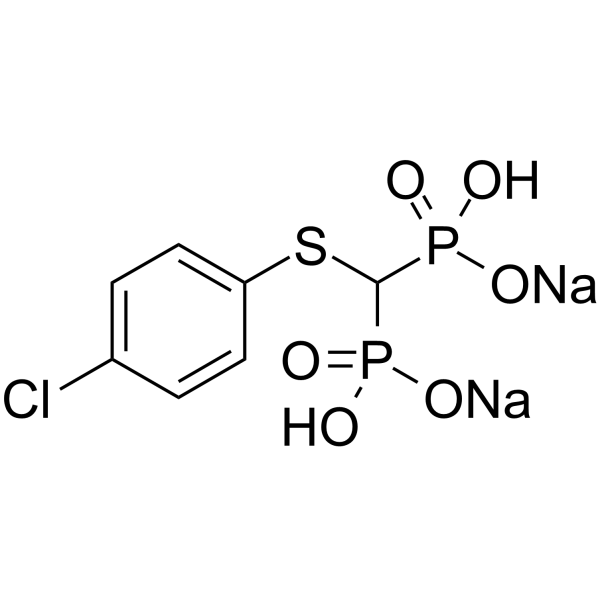 0 ImagesSynonyms: Tiludronic acid disodiumTiludronate (Tiludronic Acid) disodium, an orally active bisphosphonate, can act an osteoregulator. Tiludronate is used for the research of the metabolic bone disorders. Tiludronate is a potent inhibitor of the osteoclast vacuolar H(+)-ATPase. Antiresorptive and anti-inflammatory properties.
-
SCH28080
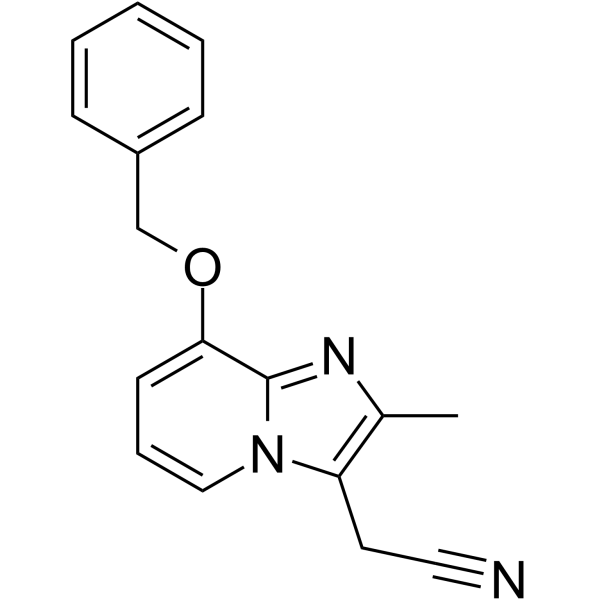 0 ImagesSCH28080 is a reversible, K+-competitive inhibitor of the gastric H,K-ATPase, with a Ki of 0.12 μM. SCH28080 is an effective inhibitor of acid secretion in vivo and with anti-gastric ulcer activity.
-
Omeprazole (Standard)
 0 ImagesSynonyms: H 16868 (Standard)Omeprazole (Standard) is the analytical standard of Omeprazole. This product is intended for research and analytical applications. Omeprazole (H 16868) is an orally active H+,K+-ATPase inhibitor and a proton pump inhibitor. Omeprazole competitively inhibits CYP2C19, CYP3A4, and CYP2C9 activity. Omeprazole inhibits gastric acid secretion and can be used for acid-related gastrointestinal disorders. Omeprazole inhibits pancreatic cancer cell proliferation, induces apoptosis, autophagosome accumulation (elevated LC3-I and LC3-II levels), oxidative stress, and cytogenetic imbalance, modulates lysosomal transport, reduces inflammatory cytokines. Omeprazole alters small intestinal morphology and magnesium absorption, and induces gastric mucosa morphologic changes. Omeprazole aslo has neuroprotective and antibacterial effects.
-
Abscisic acid-d6
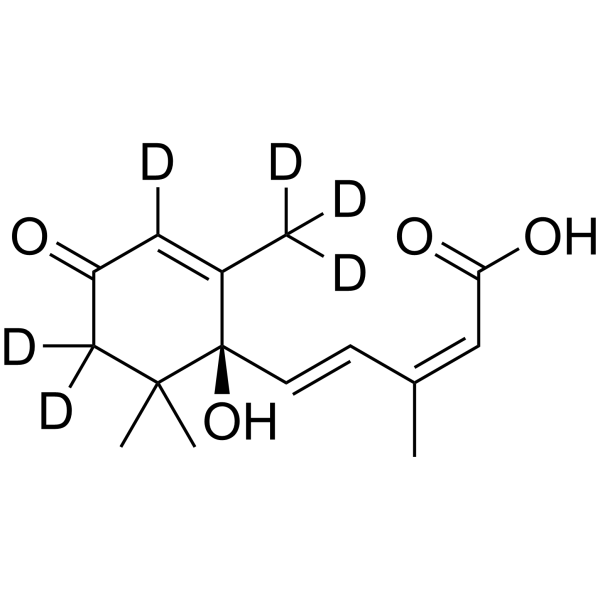 0 ImagesSynonyms: (S)-(+)-Abscisic acid-d6; ABA-d6Abscisic acid-d6 is deuterium labeled Abscisic acid. Abscisic acid inhibits proton pump (H+-ATPase).

-
Ilaprazole sodium hydrate
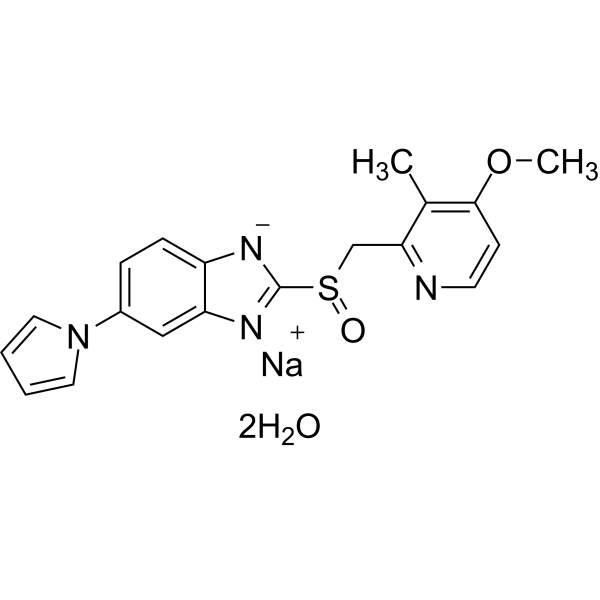 0 ImagesSynonyms: IY-81149 sodium hydrateIlaprazole (IY-81149) sodium hydrate is an orally active proton pump inhibitor. Ilaprazole sodium hydrate irreversibly inhibits H+/K+-ATPase in a dose-dependent manner with an IC50 of 6 μM in rabbit parietal cell preparation. Ilaprazole sodium hydrate is used for the research of gastric ulcers. Ilaprazole sodium hydrate is also a potent TOPK (T-lymphokine-activated killer cell-originated protein kinase) inhibitor.
-
Pantoprazole sodium hydrate
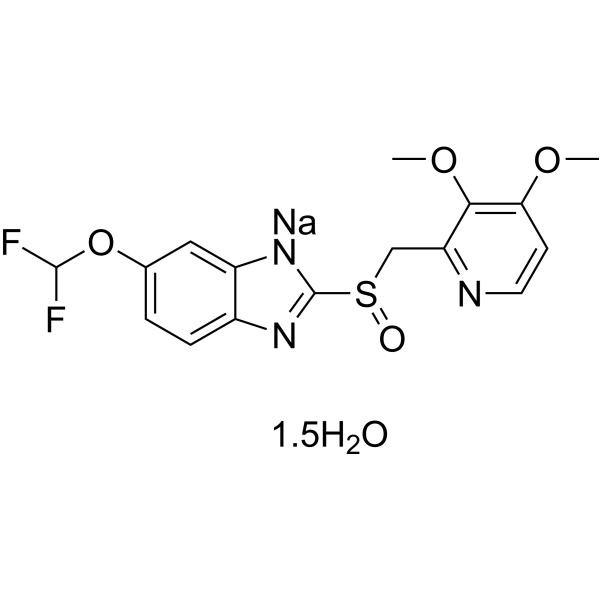 0 ImagesSynonyms: BY1023 sodium hydrate; SKF96022 sodium hydratePantoprazole sodium hydrate (BY10232 sodium hydrate) is an orally active and potent proton pump inhibitor (PPI). Pantoprazole sodium hydrate, a substituted benzimidazole, is a potent H+/K+-ATPase inhibitor with an IC50 of 6.8 μM. Pantoprazole sodium hydrate improves pH stability and has anti-secretory, anti-ulcer activities. Pantoprazole sodium hydrate significantly increased tumor growth delay combined with Doxorubicin (HY-15142).
-
Linaprazan
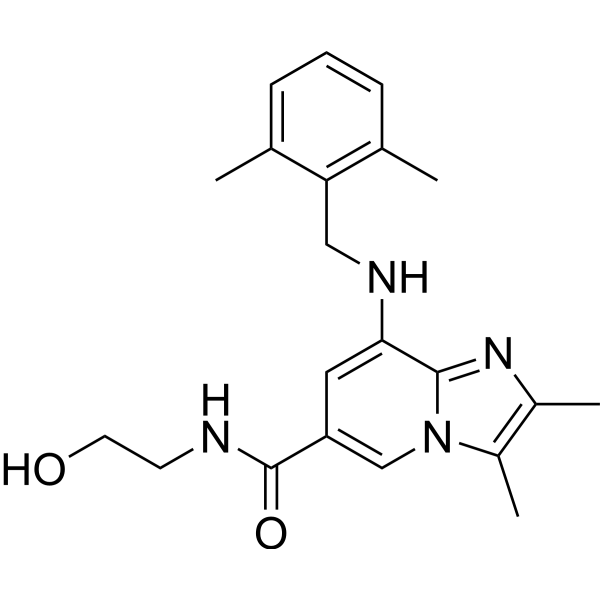 0 ImagesSynonyms: AZD0865Linaprazan (AZD0865) can inhibit H+,K+ -ATPase in the stomach through K+ competitive binding, (IC50: 1.0 ± 0.2 μM), it has a strong inhibitory effect on acid. Linaprazan (AZD0865) can be used for research on reflux esophagitis with oral activity.
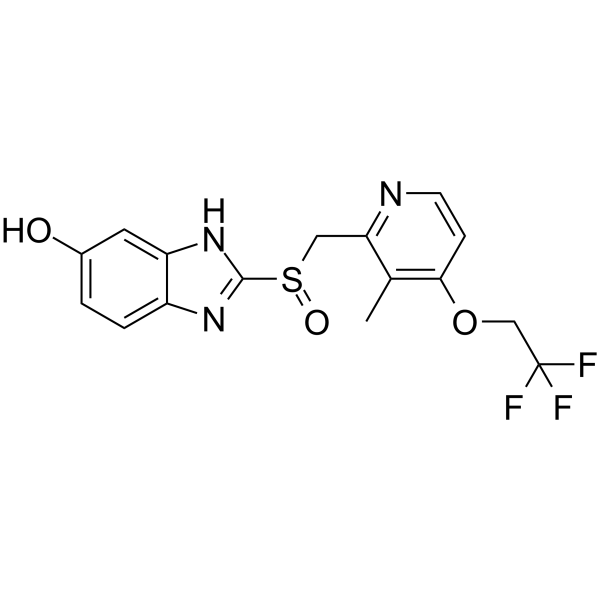
-
Padoprazanum
 0 ImagesSynonyms: PadoprazanPadoprazanum (Padoprazan) is a Proton Pump inhibitor.
-
Bafilomycin B1
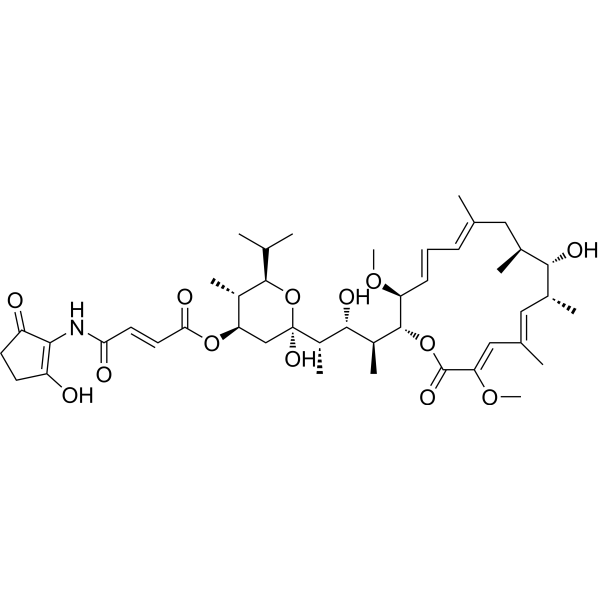 0 ImagesBafilomycin B1 is a macrolide antibiotic that can be isolated from mycelium of Streptomyces gresuis. Bafilomycin B1 is neuroprotective against Chloroquine (HY-17589A)-induced death. Bafilomycin B1 is a structural analog of Bafilomycin A1 and has the ability to inhibit V-ATPase. Bafilomycin B1 inhibits significantly the oxidized low density lipoprotein (LDL)-induced accumulation of lipid droplets.
-
Abscisic acid (Standard)
 0 ImagesSynonyms: (S)-(+)-Abscisic acid (Standard); ABA (Standard)Abscisic acid (Standard) is the analytical standard of Abscisic acid. This product is intended for research and analytical applications. Abscisic acid ((S)-(+)-Abscisic acid), an orally active phytohormone in fruits and vegetables, is an endogenously produced mammalian hormone. Abscisic acid is a growth inhibitor and can regulate many aspects of plant growth and development. Abscisic acid inhibits proton pump (H+-ATPase) and leads to the plasma membrane depolarization in a Ca2+-dependent manner. Abscisic acid, a LANCL2 natural ligand, is a potent insulin-sensitizing compound and has the potential for pre-diabetes, type 2 diabetes and metabolic syndrome.
-
V-ATPase-IN-1
 0 ImagesV-ATPase-IN-1 (Compound 3b-03) is a Vacuolar-type H+-ATPases (V-ATPase) inhibitor (IC50 = 194.80 μM) that can effectively target the V-ATPase subunit A (Kd = 0.803 μM). V-ATPase-IN-1 exhibits insecticidal activity against M. separata (LC50 = 2.64 mM) and contributes to research in the development of chemical insecticides.
-
Omeprazole-d3
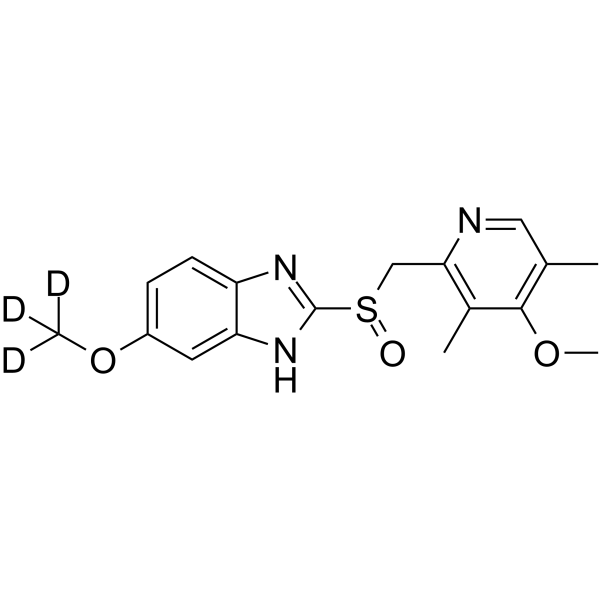 0 ImagesSynonyms: H 16868-d3Omeprazole-d3 (H 16868-d3) is deuterium labeled Omeprazole. Omeprazole (H 16868) is an orally active H+,K+-ATPase inhibitor and a proton pump inhibitor. Omeprazole competitively inhibits CYP2C19, CYP3A4, and CYP2C9 activity. Omeprazole inhibits gastric acid secretion and can be used for acid-related gastrointestinal disorders. Omeprazole inhibits pancreatic cancer cell proliferation, induces apoptosis, autophagosome accumulation (elevated LC3-I and LC3-II levels), oxidative stress, and cytogenetic imbalance, modulates lysosomal transport, reduces inflammatory cytokines. Omeprazole alters small intestinal morphology and magnesium absorption, and induces gastric mucosa morphologic changes. Omeprazole aslo has neuroprotective and antibacterial effects.
-
RSC-1255
 0 ImagesRSC-1255 is a potent and selective Vacuolar H⁺-ATPase (V-ATPase) inhibitor that directly binds the mammalian V-ATPase complex with a Kd = 23 nM. RSC-1255 exhibits preferential cytotoxicity toward KRAS-mutant cancer cells, especially KRASG13D and KRASG12V cells. RSC-1255 induces apoptosis and blocks lysosomal acidification, autophagy, and macropinocytosis in cancer cells. RSC-1255 can be used for the study of KRAS-driven lung and colon cancers.
-
(S)-Lansoprazole
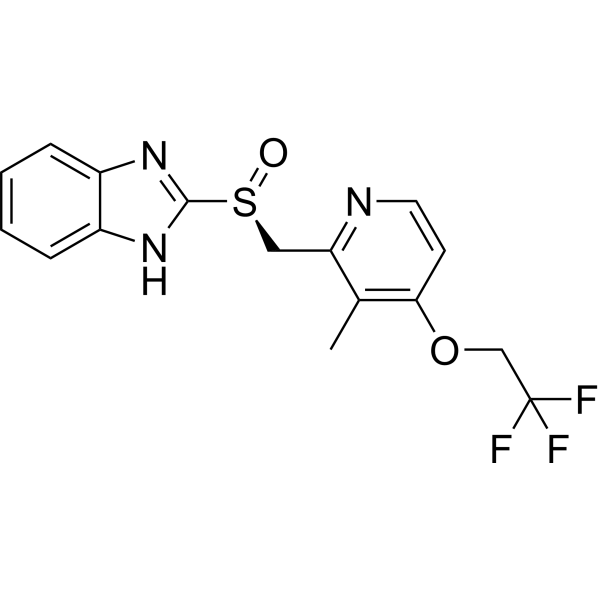 0 ImagesSynonyms: Levolansoprazole(S)-Lansoprazole (Levolansoprazole) is an isoform of Lansoprazole (HY-13662), which is an orally active proton pump inhibitor which prevents the stomach from producing acid. Lansoprazole (AG 1749) is a potent brain penetrant neutral sphingomyelinase (N-SMase) inhibitor (exosome inhibitor).
-
Bafilomycin D
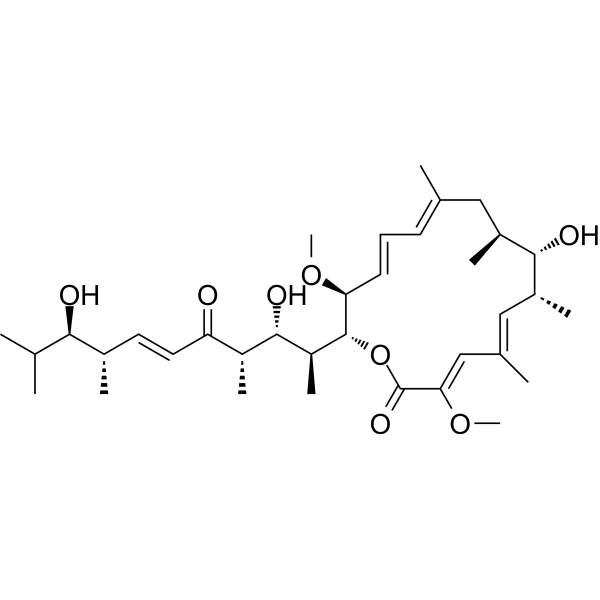 0 ImagesBafilomycin D is a specific inhibitor of vacuolar-type ATPase (V-ATPase). Bafilomycin D has antimicrobial, insecticidal, herbicidal and cytotoxic activity.




